Changelog

What's new

Release notes for the Bobsled data-sharing platform — new capabilities, improvements, and fixes, newest first.

  1. Scheduled data products on BigQuery

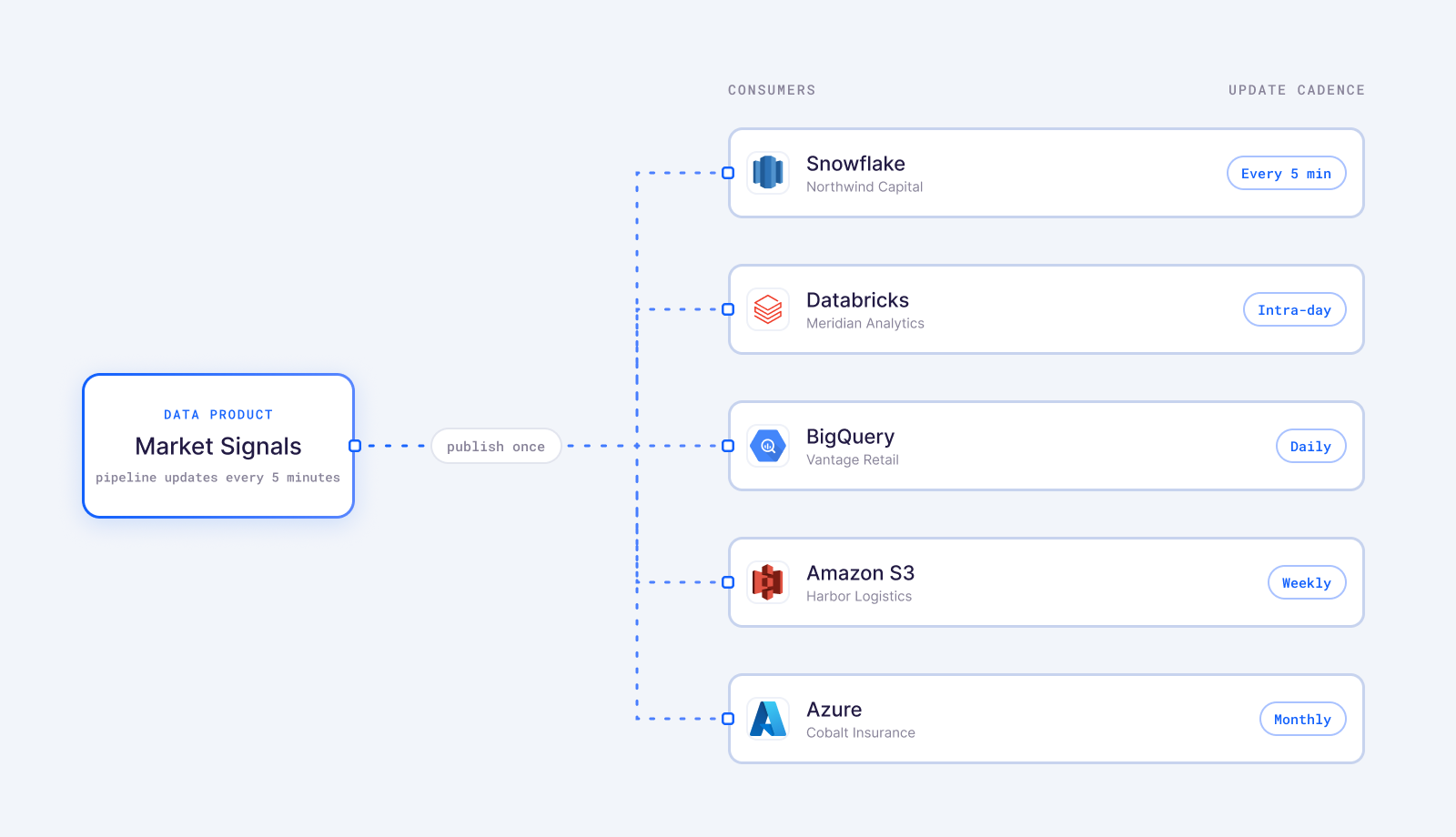
    Scheduled data products now run on BigQuery. Publish point-in-time snapshots to BigQuery on a schedule you set, and every consumer reads the same consistent, reproducible release. Scheduled publishing now spans all three major warehouses — Snowflake, Databricks, and BigQuery.

    • Iceberg tables on BigLake with snapshot capture, rollback to any captured snapshot, and automated compaction, including for data originating outside GCP.
    • One-click table backfill from the tables overview page.
  2. Per-view grants on Databricks

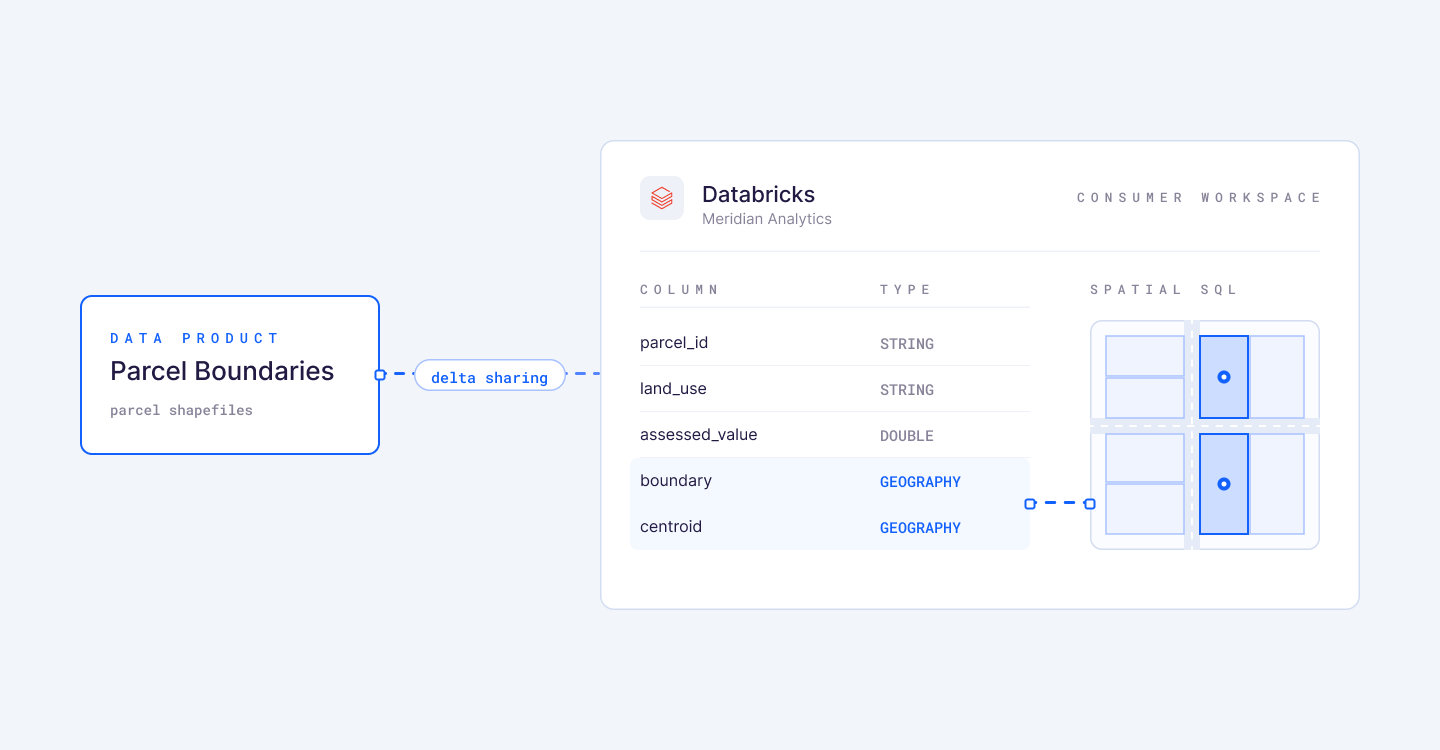
    Databricks share grants are now scoped to individual views. Each consumer's access covers exactly the views in their data product, giving you view-level control over what you share.

    • Local-copy status visible in the UI, with accurate row counts in the mount-status API.
    • Fulfillment logs record who triggered each backfill and which cascade it belongs to.
  3. AI error summaries

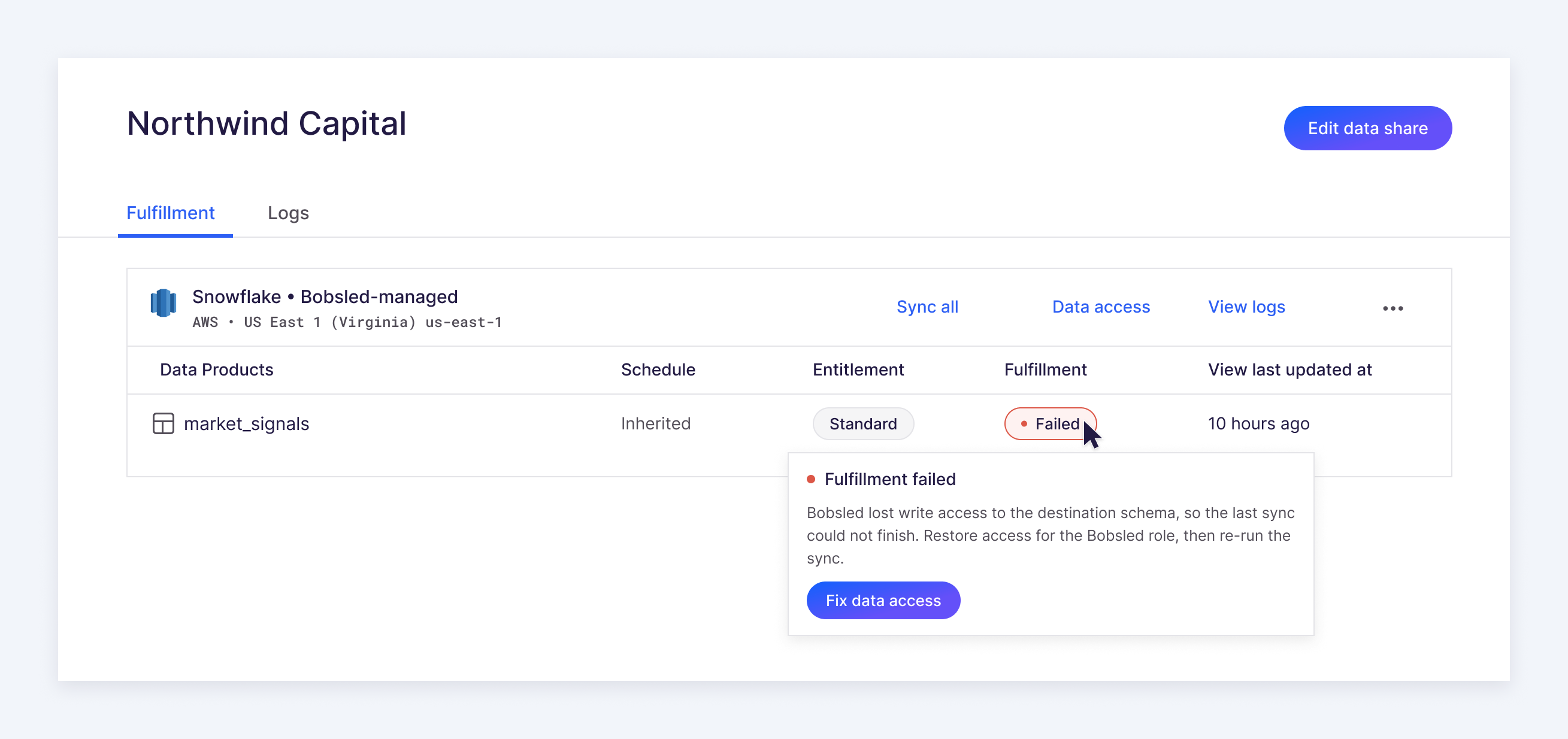
    When a fulfillment fails, Bobsled generates a plain-language summary of what went wrong and where in the delivery it happened. Open the failed fulfillment and read one clear sentence describing the cause.

    • Merge-on-read configurable per individual Sledhouse table.
    • Failure alerts describe what broke and the recommended next step.
  4. Multi-region local copies

    Data products can now maintain local copies across multiple regions, keeping a managed copy of your data near wherever your consumers are.

    • Central tags settings page for managing tag categories and values.
    • BigQuery local copies handle very large tables through a new indirect write path.
  5. Share to BigQuery, end to end

    Fulfill shares to BigQuery from setup to steady state. A dedicated fulfillment UI, consumer access indicators, and automatic re-grants when a consumer's principals change — everything needed to deliver to a BigQuery consumer end to end.

    • Set zero-egress smart storage as an environment default, with smart-storage and requester-pays status on fulfillment and consumer pages.
    • Tables, data products, and consumers display their creation date.
  6. Scheduled data products, now GA

    Scheduled data products are now generally available across destinations. Publish on a schedule you set, and every consumer sees a consistent point-in-time snapshot of each release.

    • Richer REST API: structured tag assignments (read and write), smart-storage flags, and mount statuses on table queries.
    • Fulfillment health at a glance — stale and errored alerts on the Data Products page, issue counts on Data Fulfillment.
  7. BigQuery local copies

    Data products can now maintain local copies in BigQuery, holding a managed copy of your data right in the consumer's warehouse.

    • Configurable Spark resource allocation for Synapse jobs.
    • The credentials page shows which credential is failing and the error it's producing.
  8. Statuses that explain themselves

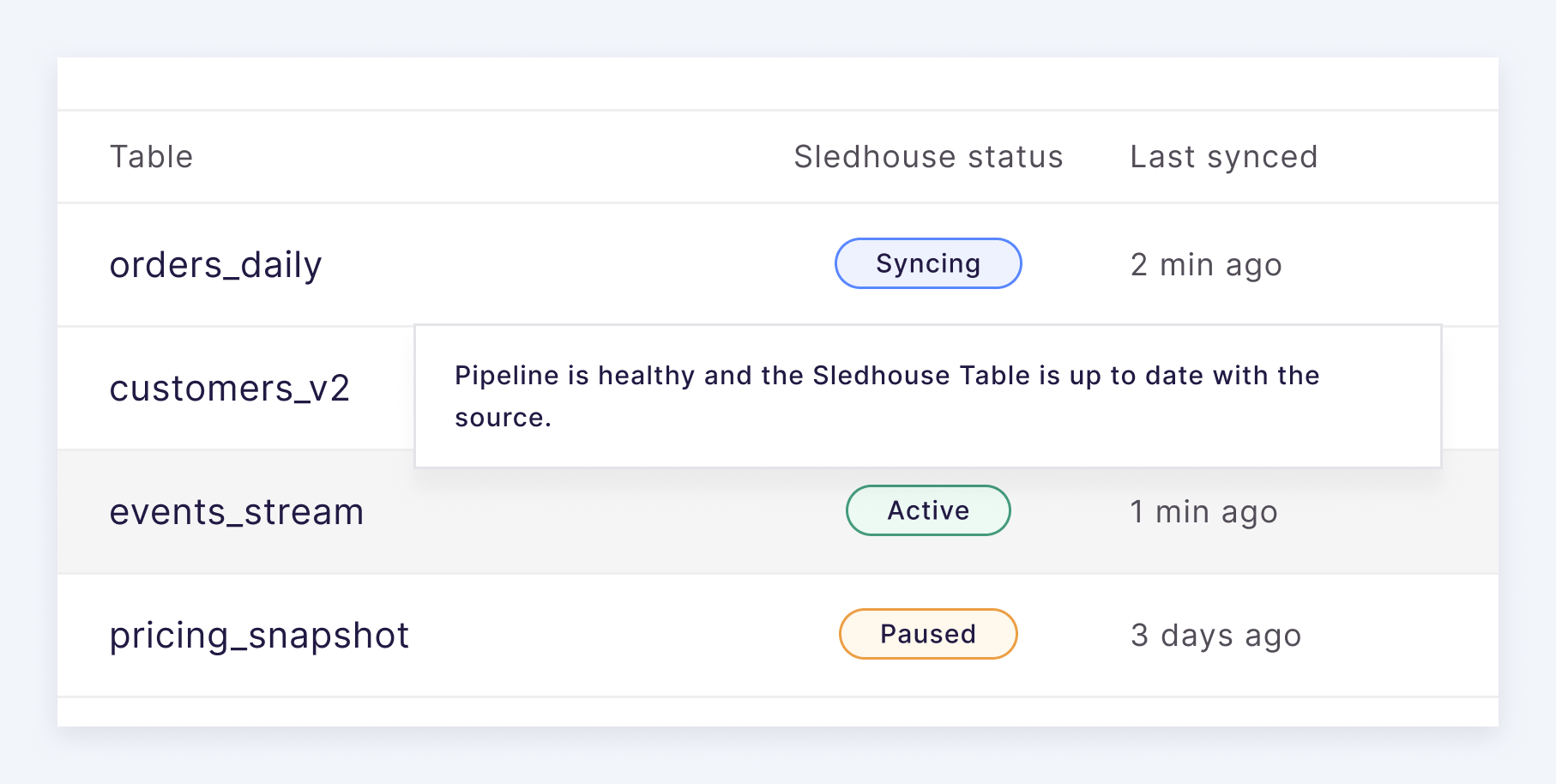
    Hover any Sledhouse table status to see a description of what it means and what happens next.

    • Scheduled products on Databricks serve from external Delta tables using TIMESTAMP AS OF, so every query reads the published snapshot.
    • Data freshness shown per consumer on the Consumers page.
  9. Long-running DDL, handled

    Long-running CREATE EXTERNAL TABLE operations on Databricks now run asynchronously and complete reliably, even for very large tables.

    • Each scheduled data product publishes as soon as its own tables are ready.
    • A CSV header setting tells Bobsled whether files include a header row.
  10. Cross-database Snowflake shares

    Snowflake shares spanning multiple databases now receive their REFERENCE_USAGE grants automatically.

    • Customer-facing error codes rewritten in plain language.
    • The API validates autofulfillment configurations at setup time with a specific error for invalid ones.
  11. Scheduled data products

    Data products on Databricks and Snowflake can now publish on a schedule with point-in-time consistency. Every consumer sees each release as a complete, consistent snapshot.

    • Zero-egress smart storage on GCP, joining AWS and Azure.
    • Supply your own SQL for any destination to control dialect translation.
  12. Errors you can act on

    Missing-cursor failures now include a concrete recommendation for the backfill that resolves them.

    • Change-tracked tables on merge-on-read Databricks destinations apply each row change exactly once.
    • Refinements to per-dialect SQL editing in data products.
  13. See what's holding things up

    Data products now list which of their Sledhouse tables are still preparing, with each table's readiness state shown inline.

    • New source columns flow through Databricks custom data products automatically.
    • Snowflake mount jobs retry and recover from timeouts; Azure SAS token generation retries transient failures.
  14. Pick your target database

    Specify the destination database for a data product at creation time.

    • REST endpoints return row samples and row counts for any Sledhouse table.
    • Filtering, sorting, and object counts across the Tables, Data Products, and Data Fulfillment tabs.
  15. One data product, every dialect

    A single SQL data product can now serve Snowflake, Databricks, and BigQuery consumers, with dedicated SQL for each dialect.

    • GCS destinations support requester-pays buckets, matching AWS.
    • Sledhouse autofulfillment covers VPS destinations.
  16. External S3 destinations

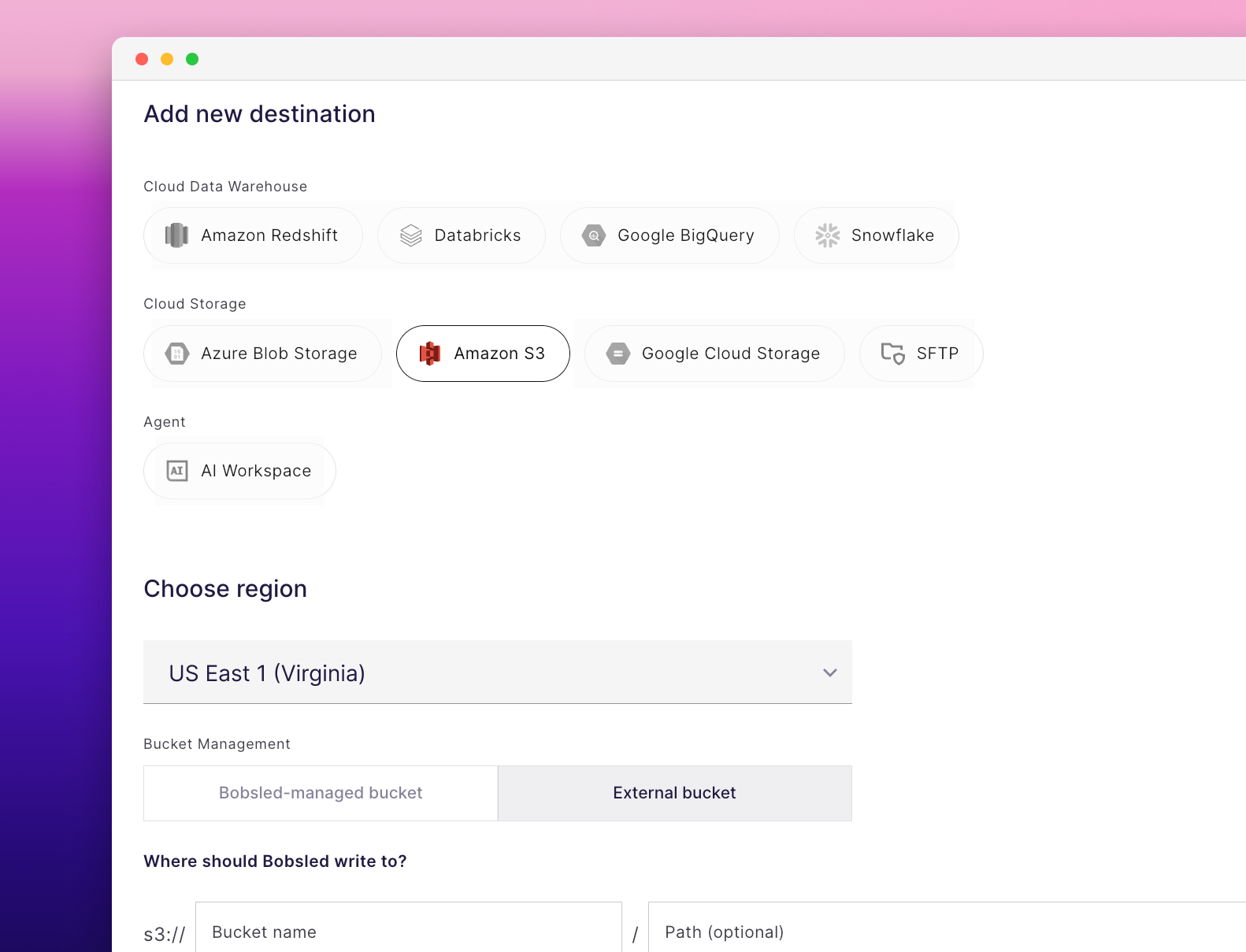
    Deliver data products directly into your consumer's own S3 bucket, configured entirely in the UI.

    • Tag Sledhouse tables and filter or search across table and data product lists.
    • Log views accept URL parameters, so a filtered logs tab has a shareable link.
  17. Sturdier pipelines, clearer statuses

    File-storage pipelines now recover from transient network failures with all loaded history intact.

    • Snowflake listings created with identifiable, human-readable names.
    • Destinations report their specific provisioning stage throughout setup.